
Wood-damaging
Termites control
Subterranean and other wood-damaging termites quietly weaken structural lumber; inspections prevent expensive repairs.
When to call
Call dispatch if any of these are true. We will confirm coverage and next steps.
- Swarmers or wings indoors, especially near windows or lights
- Mud tubes on slabs, piers, or garage expansion joints
- Soft wood, blistering paint, or sagging trim
Quick facts
Fast answers for dispatch and planning
Share what you are seeing and how long it has been active.
- Subterranean termites travel through mud tubes.
- Damage is often hidden inside wood.
- Moisture control helps reduce risk.

Service match
These programs cover termites issues and follow-ups.
Signs of infestation
What you are likely to notice
Use these cues to confirm activity and share it with dispatch.
Signs you will notice
- Soft or blistered wood that sounds hollow
- Discarded wings on sills or near entry points
- Mud spots or frass around trim and expansion joints
Identification cues
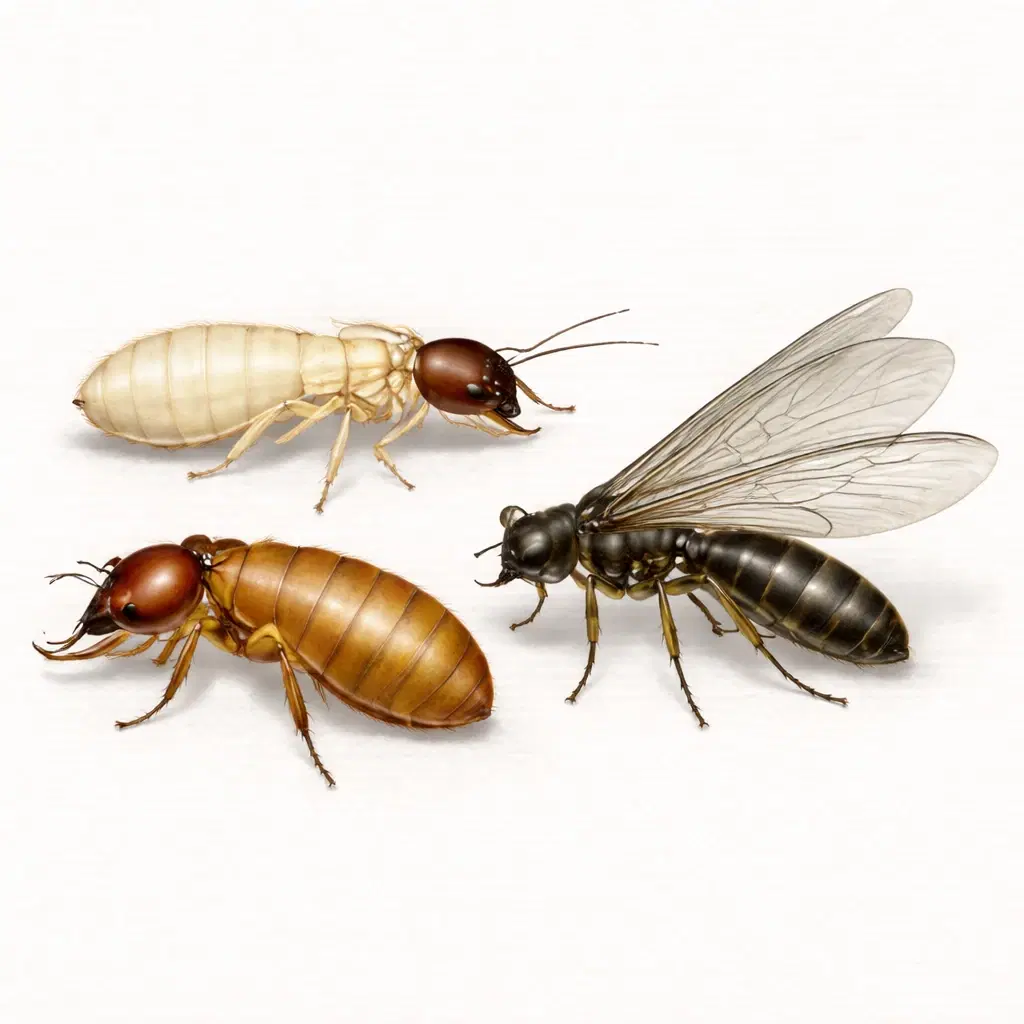
- Cream-colored workers and darker soldiers with prominent heads
- Mud tubes on foundations, piers, or wall voids
Why it is a problem
Health, property, and operational impact
Use these impacts to prioritize next steps.
Why it matters
Termites can weaken structural lumber and delay property transactions.
Risks to monitor
- Structural weakening and costly repairs
- Loan or inspection delays for property sales
DIY vs professional
Safe first steps and when to bring in a pro
Follow label directions and avoid DIY treatments that spread activity.
What you can do now
- Keep slab edges clear and reduce wood-to-soil contact.
- Fix leaks and drainage issues that feed moisture.
- Leave evidence in place for inspection.
When to call a professional
- Inspect the structure and map activity zones.
- Recommend baiting or liquid barriers based on construction.
- Set renewal and monitoring schedules.
Treatment approach
Inspection-first plans tailored to your pest pressure
Our team confirms activity and builds a treatment plan for your property.
What our approach looks like
- Inspect structure, moisture conditions, and risk zones.
- Recommend baiting or liquid treatment based on construction.
- Provide monitoring and renewal guidance.
termite program
GuidedInspection, diagram, and warranty options tailored to construction type.
We start by confirming where activity is coming from and why it's happening.
- Inspect kitchens, baths, attics, baseboards, and exterior entry points.
- Identify moisture, food sources, and common travel paths.
- Confirm activity level and construction type to guide precise placement.
- Review safety considerations to protect families and pets.
residential program
GuidedWe start by confirming where activity is coming from and why it's happening.
- Inspect kitchens, baths, attics, baseboards, and exterior entry points.
- Identify moisture, food sources, and common travel paths.
- Confirm activity level and construction type to guide precise placement.
- Review safety considerations to protect families and pets.
Simple steps that help treatments work better and last longer.
- Clear access to sinks, baseboards, and attic areas before service.
- Pick up pet bowls, toys, and personal items in treatment zones.
- Follow drying and re-entry guidance after the visit.
- Share prior pest history or sensitive areas if applicable.
commercial program
GuidedMoisture readings and annual renewals documented for property managers.
Documentation-driven inspections that support consistency and compliance.
- Inspect food prep areas, storage, restrooms, and utility spaces.
- Identify entry points, sanitation gaps, and environmental contributors.
- Assess pest pressure and facility layout.
- Record findings for service logs and audit readiness.
Ongoing service tuned to operational risk and pressure level.
- Scheduled exterior service based on pressure and site needs.
- Interior monitoring or treatment as required.
- Refresh baits and document readings for regulated environments.
- Provide coverage if pests return between visits.
Prevention tips
Reduce future activity with smart prevention
Small adjustments keep pressure lower between visits.
Prevention tips
- Maintain drainage away from the foundation.
- Store firewood off the ground and away from walls.
- Repair leaks and keep gutters clear.
Prep & aftercare
- Keep crawlspace or slab edges clear for inspection and monitoring.
- Repair leaks or drainage issues that fuel conducive conditions.
- Leave mud tubes or damaged wood in place so inspectors can document.
FAQs
Answers from dispatch and technicians
Common questions we hear before a visit.
Do I have to sign a long-term contract?Expand answer
You are offered ongoing programs for consistent protection, but we focus on clear communication instead of confusing long-term commitments.
Which areas do you service?Expand answer
We focus on Volusia County and nearby Central Florida communities. Call with your address to confirm coverage.
How do termite inspections and warranties work?Expand answer
We inspect the structure, moisture conditions, and conducive areas before recommending Termidor or baiting solutions. Annual renewals keep your coverage active and transferable.
Resources
Prep guides and resources will show here for this pest.
Next step
Need help with Termites?
Request an inspection and get a plan tailored to your property.